A custom pool design is more than the outline of water. The surrounding space determines how people approach the pool, where they sit, and how the area looks from inside the house. Begin with those relationships before choosing a shape or surface color.
Study the site from several positions
Look toward the proposed pool from the main living spaces, the garden entrance, and the places where people will sit. Note existing level changes, trees, and paths. A pool can be a focal point, but it should not make every other outdoor activity difficult. Sketch routes to the house, changing area, and seating before fixing its position.
Observe sun and shade across the times when the area is likely to be used. A sunny water surface and a comfortable shaded place to rest may both be desirable. Positioning those zones on a plan reveals conflicts early.
Give the edge a clear purpose
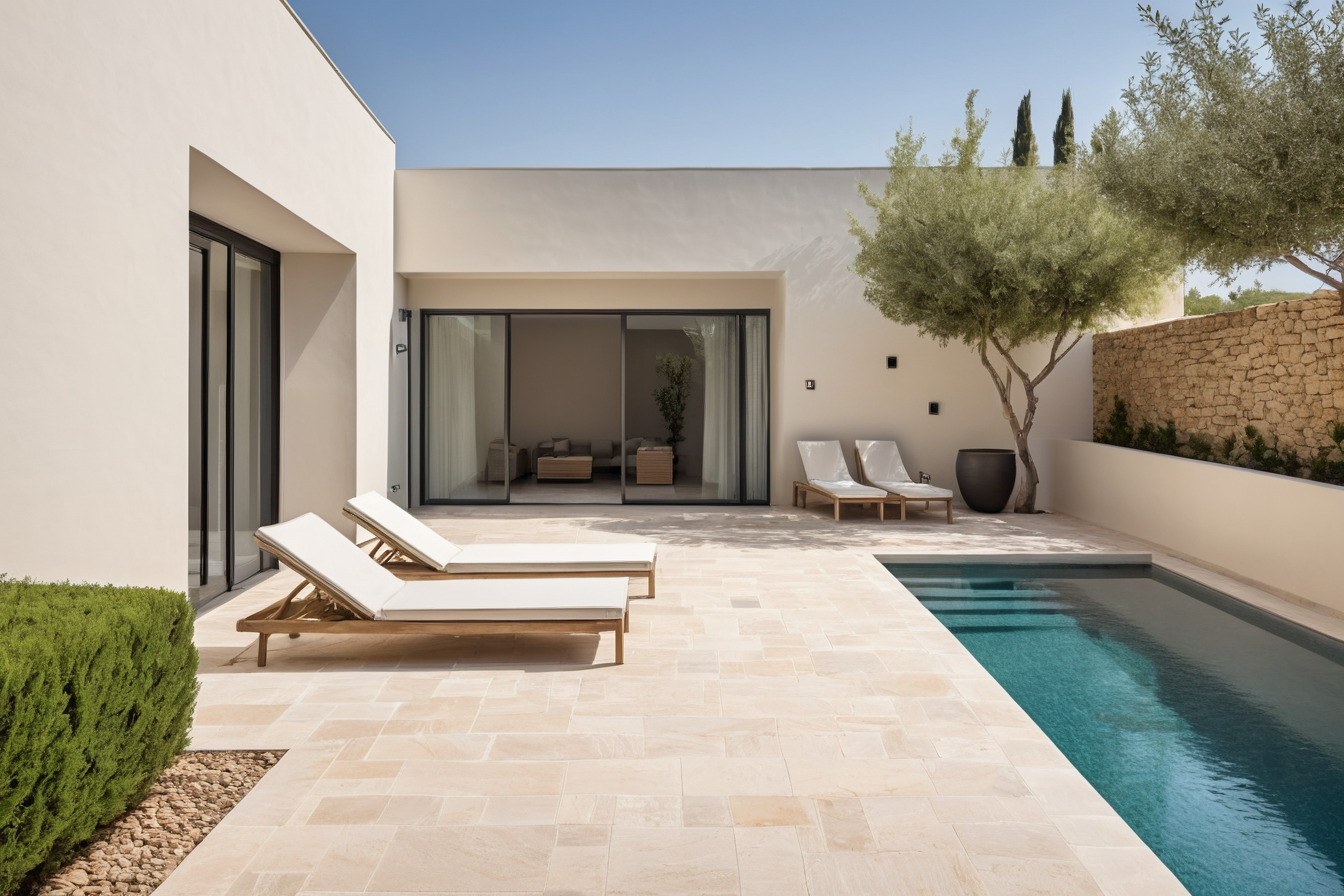
The pool edge is where wet feet meet the rest of the garden. Choose a surface for comfort underfoot, maintenance, and its relationship to adjoining paving. Compare samples in daylight, both dry and wet where the supplier permits. A pale material may keep the composition visually light, while a darker border can give the water a stronger frame.
Allow enough deck space for the actual furniture intended there. A narrow strip may look generous in a drawing until chairs, circulation, and planting are added. Keep equipment and service access in the plan without letting it dominate the view.
Connect the pool to the architecture
Borrow a line, material tone, or proportion from the house rather than treating the pool as an unrelated feature. A simple rectangular basin can echo strong architectural geometry; a softer outline may respond to an informal garden. Neither is automatically better. The surrounding planting and paving should support the chosen shape.
Lighting can make the area useful and legible after dark. Plan paths, steps, and seating as well as the water itself, and coordinate technical choices with the relevant pool professionals. Avoid a scheme that relies on dramatic effects while leaving ordinary movement poorly considered.
Leave room for life around the water
Not everyone will be swimming. A comfortable seat, shade, and a clear view can make the pool area enjoyable for guests or family members who remain dry. Consider where towels and everyday items will be kept so the space does not depend on improvised storage.
A well planned pool belongs to the home as a whole. Its shape, setting, and practical details should make the outdoor area feel coherent even on days when nobody enters the water.