
How to Tell Authentic Italian Furniture From Italian-Style Reproductions
A sofa described as Italian can mean four different things: designed and manufactured in Italy by the named brand, designed in Italy and manufactured elsewhere under licence, manufactured anywhere to an Italian design that has passed out of protection, or a copy of a recognisable Italian piece with no connection to its origin. The four sell at very different prices and behave very differently after five years.
Six physical checks that can be done in a showroom
Six checks distinguish factory-original furniture from reproductions without any documentation, and every one of them can be carried out during a showroom visit in under ten minutes.
- Identification plate or label. Established manufacturers fix a plate, sewn label or stamped mark carrying a model reference and a serial or production number. A piece with no permanent identification of any kind is difficult to trace back to a factory.
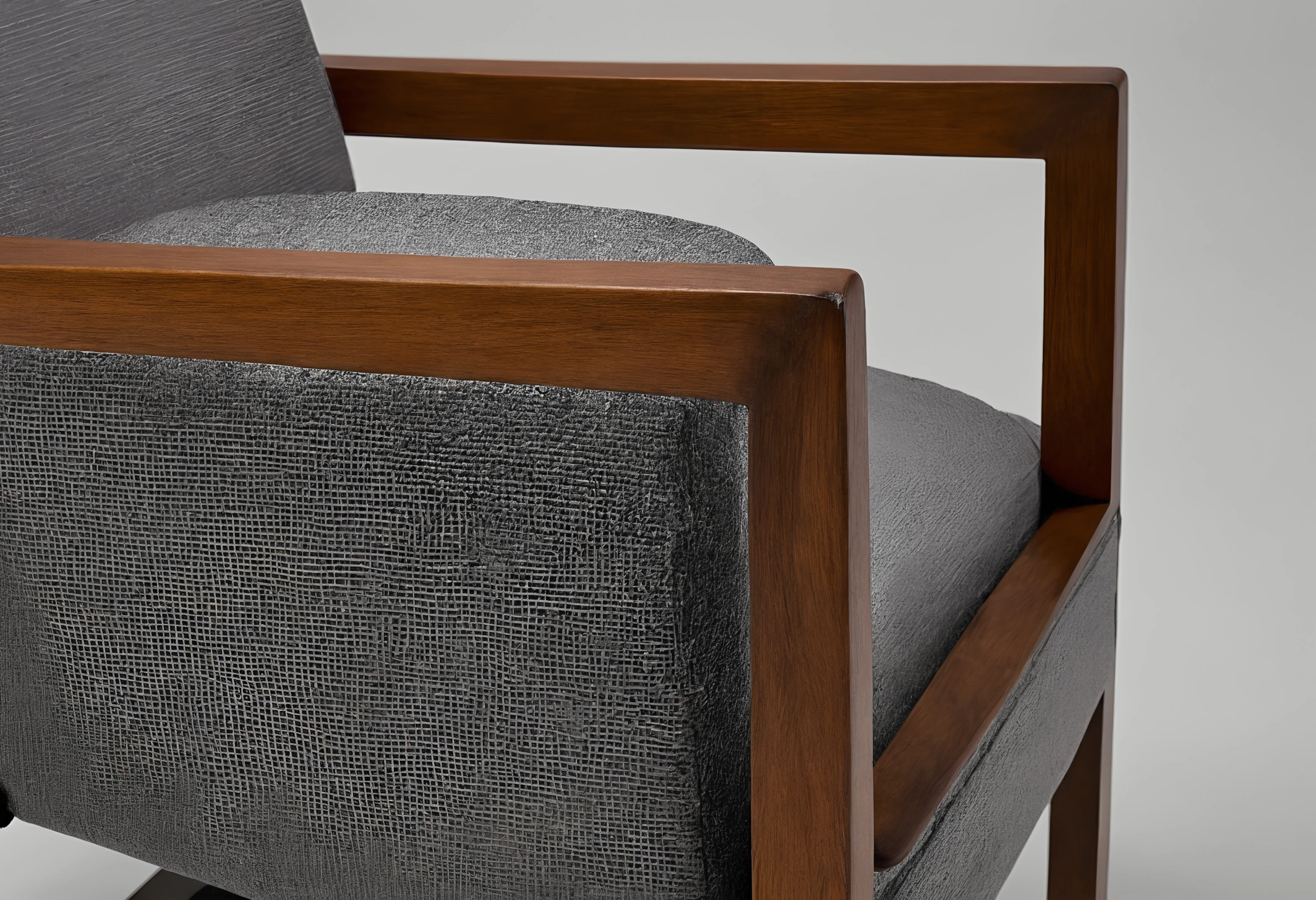
- Underside construction. Look at the frame, the webbing or springs, the staple or screw pattern, and whether the base fabric is finished neatly. Original manufacturers finish surfaces nobody sees.
- Seam alignment on patterned or ribbed upholstery. Pattern matching across a seam requires additional fabric and skilled cutting. Reproductions economise here first.
- Foam and fill behaviour. Press a cushion firmly and release. High-resilience foam and layered down recover promptly; low-density foam holds the impression.
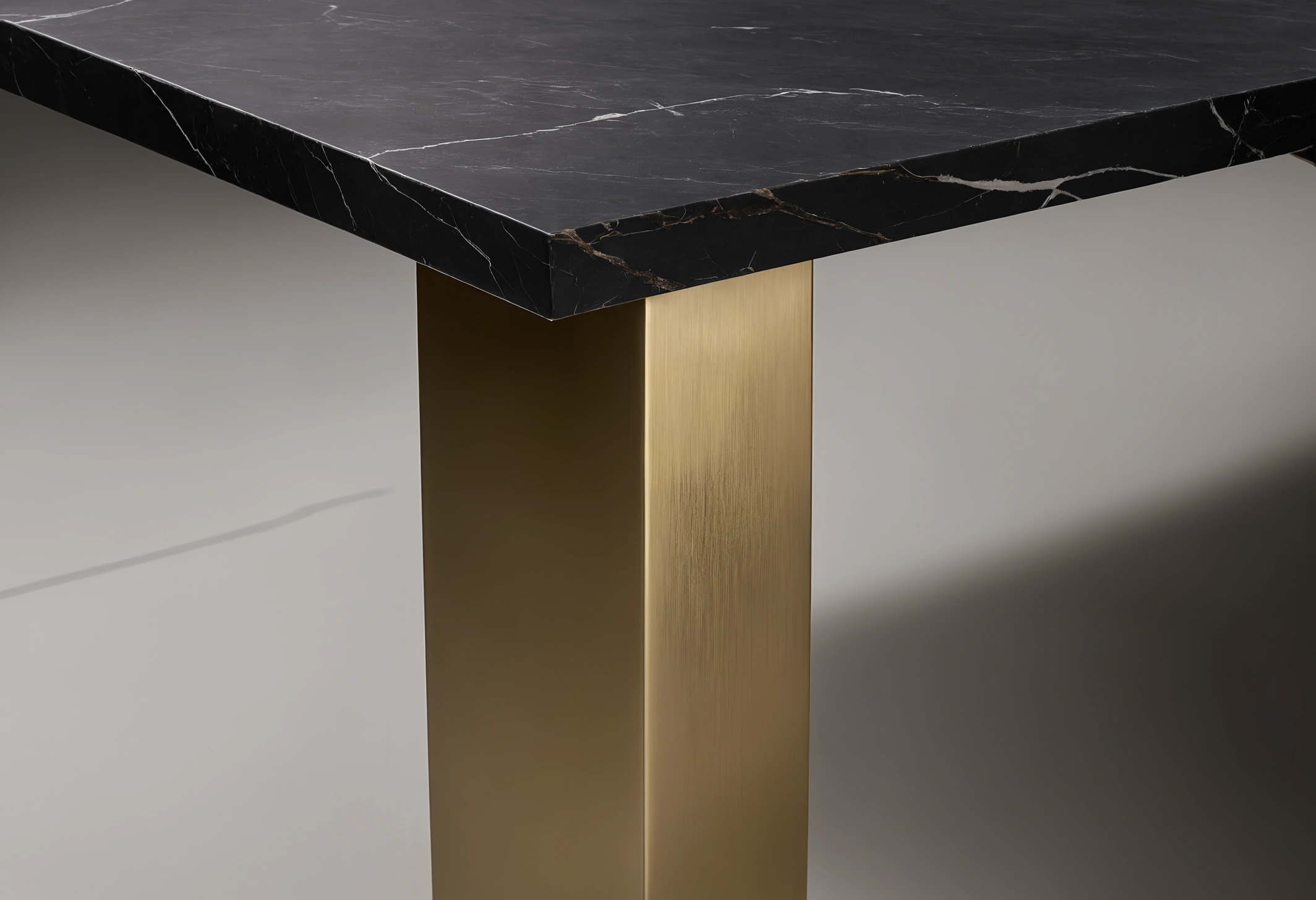
- Metal finish quality. On brass, bronze and chrome components, check edges and welds. Original components have consistent finish into corners; copies frequently show finish that stops where a machine could not reach.
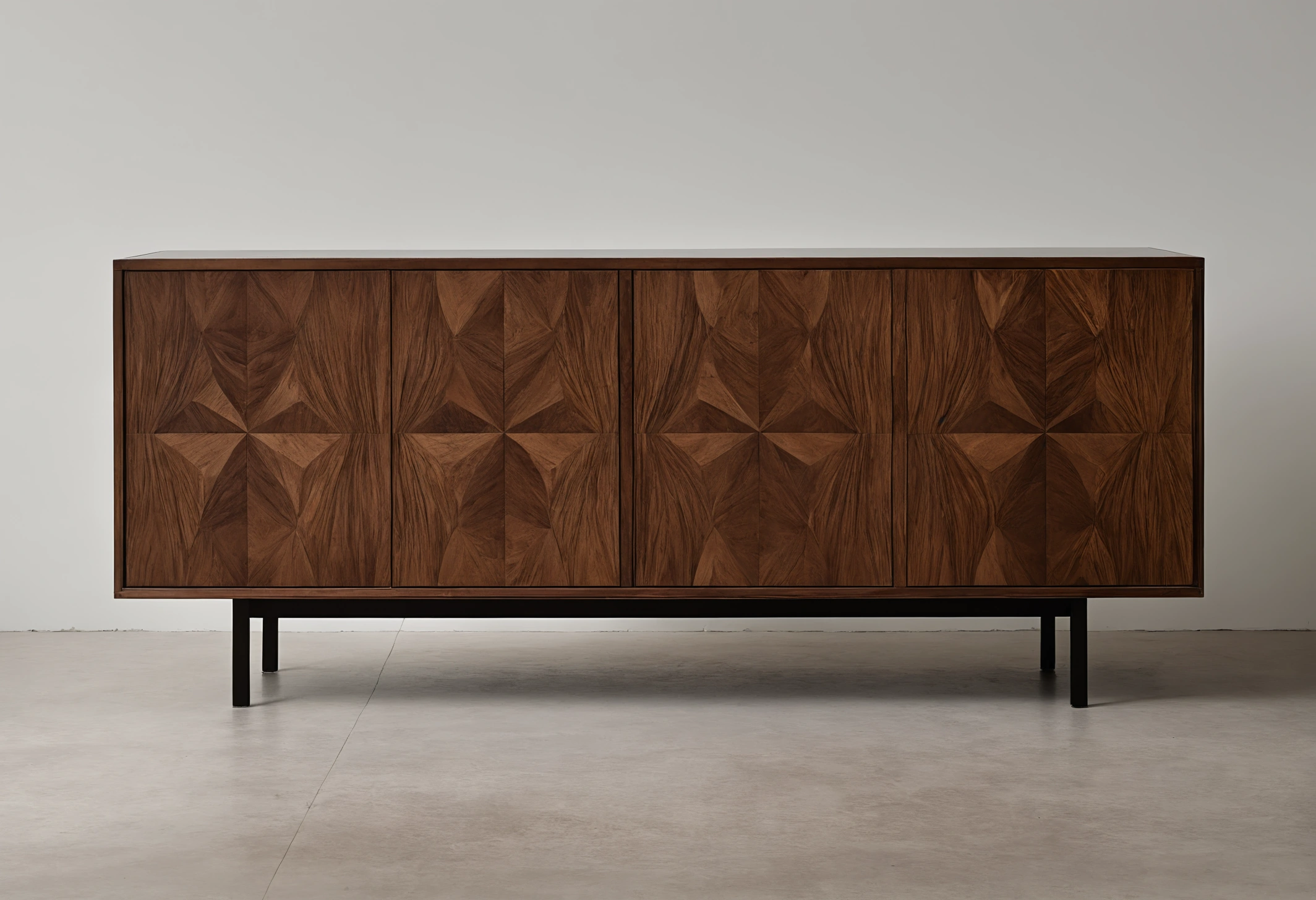
- Timber species and grain continuity. On veneered pieces, check whether grain runs continuously across adjacent doors and drawer fronts, which requires sequential veneer leaves from the same log.
Grain continuity is the check that separates price tiers most reliably. Sequential veneer matching across a cabinet front consumes a specific run of leaves from one flitch and cannot be reproduced later, which is why manufacturers using it keep records of the flitch used.
What the documentation should contain
Documentation matters as much as construction because it determines what happens when something needs attention in year three. Four documents distinguish an authorised purchase from an untraceable one.
| Document | What it proves | Why it matters later |
|---|---|---|
| Manufacturer order acknowledgement | The order was placed with the factory, carrying a factory reference | Allows the factory to identify the exact production run |
| Warranty registration | The warranty is held with the manufacturer rather than with the seller alone | Survives if the retailer ceases trading |
| Fabric or leather reference | The exact material code and dye batch | Enables matching replacement covers years later |
| Certificate of origin where issued | The country in which the goods were produced | Relevant to customs classification and to resale claims |
Fabric batch reference deserves specific attention. Dye lots vary, and a replacement cushion cover ordered three years later without the original batch reference will frequently arrive in a visibly different tone of the same named colour.
An authentic piece can be identified by its factory. A reproduction can only be described. The difference becomes concrete the first time a component needs replacing.
The legal position on design copies
Furniture designs receive protection through a combination of registered design rights, copyright in applied art, and trade mark protection on brand names and distinctive shapes. Protection terms differ by jurisdiction and by the type of right, which is why some designs are legitimately produced by multiple manufacturers while others are not.
Two distinctions matter to a buyer. A piece produced after design protection has expired can be made lawfully by anyone, and such pieces are properly described as reproductions rather than as the original brand’s product. A piece carrying a protected brand name or a registered mark without authorisation is a different matter entirely, and the Made in Italy designation itself carries specific meaning in European regulation rather than being a general description of style.
Where reproductions are a reasonable choice
Reproductions are a legitimate purchase in defined situations, and pretending otherwise helps nobody. A lawful reproduction of a design out of protection, honestly described and honestly priced, serves buyers who want a recognisable form at a fraction of the original cost.
- Short tenancies. A two-year lease rarely justifies production-order furniture with a twenty-year service life.
- Secondary spaces. Guest rooms and studies used occasionally place light demands on construction quality.
- Staging and rental units. Furniture selected for presentation rather than for long use.
The situations where reproductions disappoint are equally predictable: daily-use seating, anything carrying a mechanism, and any piece expected to be reupholstered rather than replaced. Frame quality determines whether reupholstery is worth doing, and reproduction frames frequently are not worth the labour cost of recovering.
Verifying the seller rather than the product
Verifying a seller is faster than verifying a product and answers the same question. Four checks establish whether a retailer holds a genuine account with the manufacturer whose products it displays.
- Manufacturer store locator
- Most Italian manufacturers publish an official dealer list on their own website. A seller absent from that list is not an authorised dealer for that brand, whatever the showroom displays.
- Current fabric and finish books
- Authorised dealers receive current sample books each season. Dated or incomplete books usually indicate purchasing through intermediaries.
- Factory order references on quotations
- A quotation that can be converted into a factory order acknowledgement with a reference number indicates a live trading account.
- Spare part availability
- Ask what happens if a mechanism fails in year four. An authorised dealer answers with a process; an intermediary usually answers with a replacement offer.
Showrooms holding stock of authentic Italian furniture in Dubai can normally demonstrate all four within a single visit, since each of the four is a routine part of an authorised dealer’s operation rather than a special request.
What the annual Milan fair tells a buyer
Salone del Mobile.Milano hosted more than 1,900 exhibitors and 316,342 visitors from 167 countries at its 2026 edition, held from 21 to 26 April across more than 169,000 square metres of sold-out exhibition space. The fair functions as the industry’s registry of who actually manufactures.
A brand exhibiting at the fair maintains a production capability and a commercial structure. A brand that appears only in retail catalogues without a manufacturing presence is worth investigating further. Buyers can check exhibitor participation directly through the fair’s own listings, which is a faster authenticity signal than any claim made in a showroom.
How specification protects the buyer
A written specification removes most authenticity risk before money changes hands, because it forces every claim into a checkable form. A specification naming the manufacturer, the model reference, the fabric code, the finish code and the expected lead time cannot be satisfied by a similar-looking alternative.
Studios preparing interior design specifications in Dubai normally code every item this way as a matter of process, which has the side effect of making substitution visible. A supplier who cannot supply the coded item has to propose an alternative in writing, and the client decides rather than discovering the change at delivery.
The short version
Turn the piece over, look for a permanent identification mark, press the cushions, check the veneer across adjacent fronts, and ask the seller to show the manufacturer’s dealer listing. Five actions, ten minutes, and no specialist knowledge required.
Everything else, including price, appearance and confident description, can be replicated. Construction and traceability cannot.