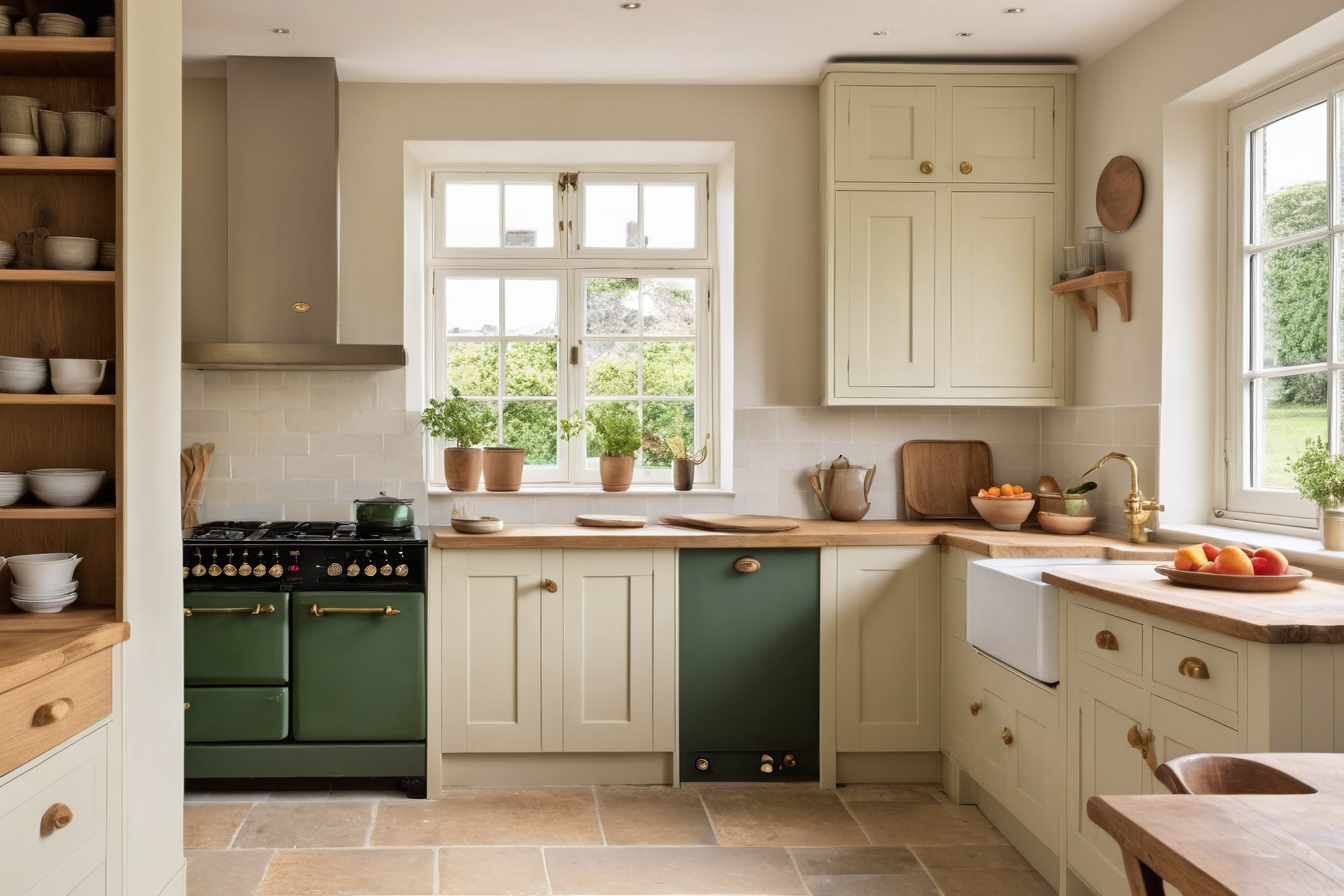
A range cooker has presence. Whether the reference is a traditional Aga or Rayburn or a more contemporary model, its width and strong silhouette can shape the kitchen around it. The room works best when that visual weight is supported by a practical cooking layout.
Give preparation space a proper place
Think through a familiar meal from washing ingredients to serving it. Where will chopped food sit before cooking? Where will a hot pan go afterward? Keep useful work surface near the cooker, without crowding the route between sink, storage, and dining area.
Draw the cooker at its actual dimensions, including doors when open. A beautiful elevation can hide the fact that an open oven door blocks a cabinet or walkway. Check the proposed model’s installation guidance with the relevant professionals before fixing cabinetry or finishes.
Balance the strong centerpiece
A large cooker naturally attracts the eye. Cabinet fronts can echo its simple geometry, while a restrained splashback gives it room to stand out. A tiled wall with a quiet variation in tone may add depth without competing with the appliance. If a decorative hood is planned, compare its scale with both the cooker and the ceiling height.
Color need not be copied throughout the room. One small repeat in a stool, pendant, or ceramic object can connect a colored cooker to the broader palette. Timber and stone can soften metal surfaces, but choose them for their suitability at each location as well as their appearance.
Plan storage around the task
Keep everyday cookware close enough to use without filling the counter. Deep drawers may suit pans; narrower storage can hold trays and utensils. Consider where oils, spices, and serving dishes are most convenient, then decide whether open shelves or closed cabinets fit the way the kitchen is maintained.
A range cooker does not remove the need for a clear cleanup zone. Make space for dishes after serving and ensure waste and cleaning supplies have sensible locations. Those quieter parts of the layout determine how pleasant the kitchen feels between meals.
Use light to reveal the working area
General ceiling light alone may leave shadows on a preparation surface. Add task lighting where food is handled and softer light for dining or evening use. Evaluate the material samples under those conditions; a dark worktop can appear very different after sunset.
The goal is a kitchen that makes the cooker feel at home. Strong visual focus is welcome, provided it does not take priority over safe access, adequate work space, and an easy daily routine.