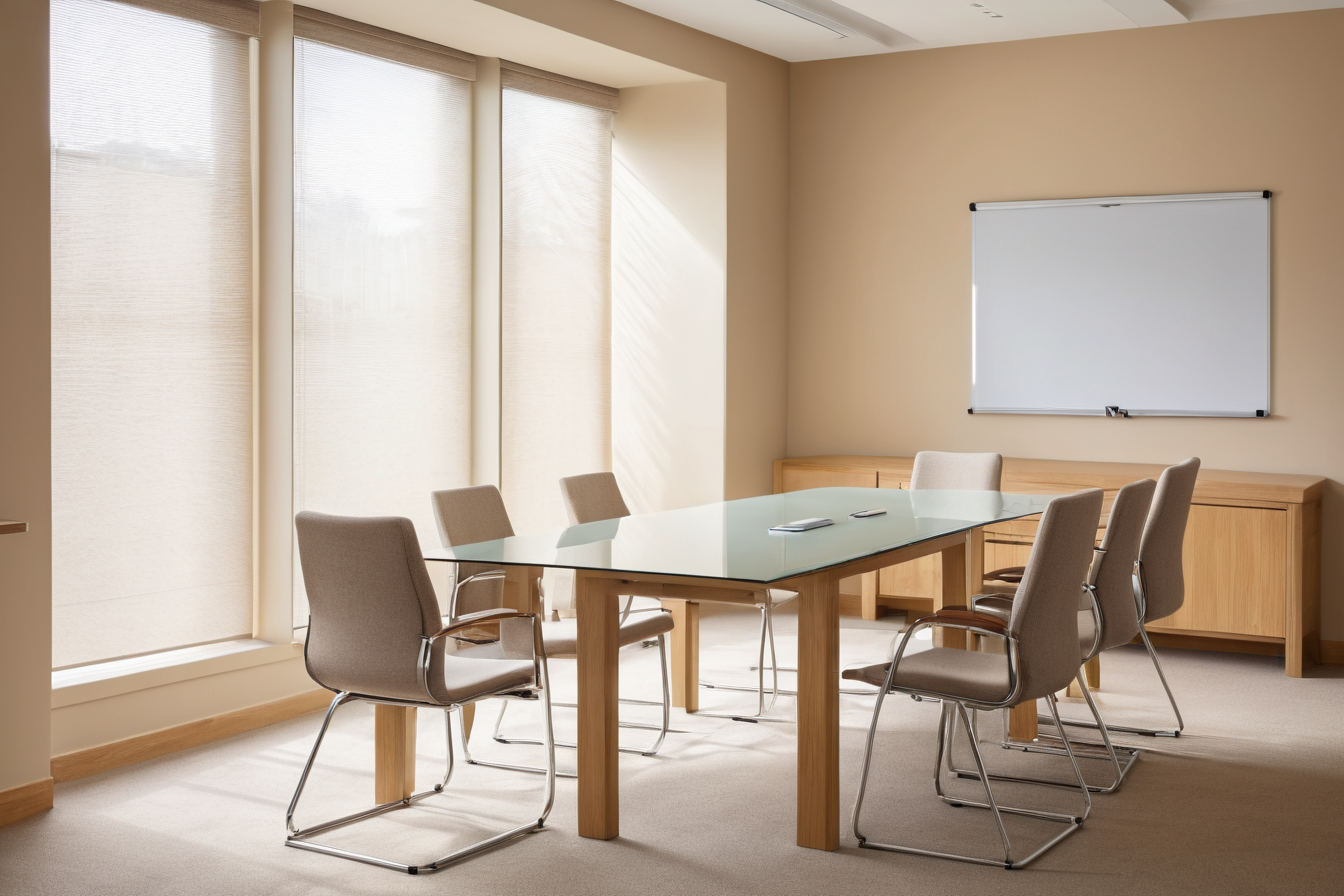
A glass whiteboard and a heavy glass table top can make an office feel open and precise. Both also expose practical details that photographs tend to hide: reflected light, fingerprints, visible cables and the condition of every edge. Treat them as working surfaces first.
Choose a whiteboard people can actually read
Place the board where people can write without blocking a doorway or a display. Check reflections from windows and downlights at seated and standing eye level. A beautiful dark backing may reduce contrast with marker ink; ask to test the proposed glass and markers together in the room’s lighting.
Decide whether the board needs magnetic use. Not every glass board accepts magnets, and compatible magnets may be specific to the product. Confirm the writable area, mounting height, wall construction and how the board will be removed for future maintenance. If it is used for confidential information, plan how it will be erased after meetings.
Specify a table top as an assembly
The glass top, its supports and its fixings must be considered together. Ask the supplier to propose the suitable glass type and thickness for the span, loads and intended use; a large sheet should not be chosen by appearance alone. Check edge treatment, corner shape and how the top is secured so it cannot shift during everyday use.
Look at the table from seated positions. A transparent top can expose knees, wiring and an untidy base. A frosted or coloured finish may hide some of that visual noise, but it changes the room’s brightness. Test a sample against the actual floor and nearby furniture.
Plan cables, acoustics and cleaning
Meeting tables often need power and data. Decide where devices connect before finalising the top; loose cables across glass undermine the clean appearance and create a nuisance. In rooms with many hard surfaces, add softness through seating, curtains or other suitable finishes so conversation remains comfortable.
Consider what appears behind a glass board as well. A busy wall or visible fixing pattern can compete with writing. Mock up the exact size with paper before the installer drills into a finished wall.
Fingerprints and marker residue are part of the maintenance brief. Ask for the maker’s cleaning guidance and avoid improvised abrasive methods. On handover, inspect edges, supports and the board’s writing performance under normal office light. The result should be a comfortable room where the glass supports daily work.