Interior shutters change both the window and the wall around it. Their repeated lines can bring order to a room, but the effect depends on scale, installation, and the amount of daylight required. Vinyl is one possible material; its suitability should be judged in the actual space rather than from a small sample alone.
Read the window first
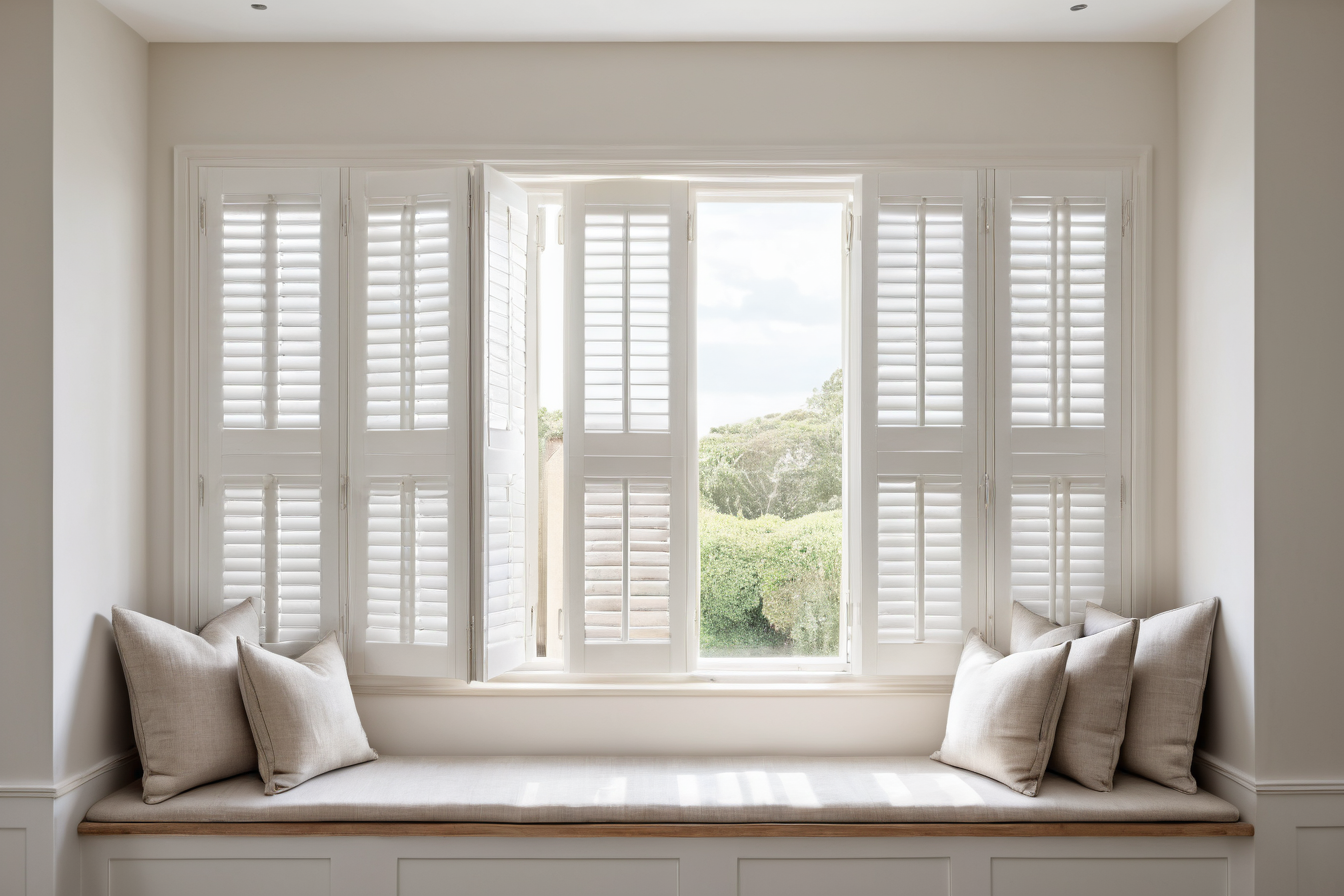
Measure the opening carefully and note handles, recess depth, and any uneven edges. A shutter frame needs enough space to operate without striking a handle or nearby furniture. Decide whether the panels should sit within the reveal or cover the opening; the choice changes how much of the frame is visible.
Consider how the window opens. Panels that look neat when closed may need a clear place to fold back. Sketch that movement before ordering, especially in narrow rooms or beside a desk.
Match louvers to the room
Broader louvers can give a calmer, more open pattern; narrower ones create a finer rhythm. View full-size samples if possible. The angle of the louvers affects privacy and the direction of light, but shutters still occupy part of the glazing even when open. If maximum daylight is a priority, compare them with a simple blind or curtain.
White can blend into pale walls, while a warmer off-white may sit better beside cream paint or natural wood. Check the finish against the existing window frame. A glossy surface can read differently from the matte walls around it.
Plan for the way the room is used
In a bedroom, think about privacy, daylight on waking, and whether additional soft curtains are wanted for atmosphere. In a living area, check the view at seated eye level. A room that needs frequent ventilation should have a panel arrangement that makes opening the window easy.
Vinyl surfaces are generally chosen for straightforward wiping, but joints, hinges, and slats still need routine dusting. Ask for the manufacturer’s care guidance and look at a sample edge to understand how it is made. Material quality and hardware will affect the result as much as the label on the product.
Keep the surrounding scheme simple
Shutters already provide a strong grid. Pair them with quieter wall treatments if the room has many lines from shelving, tiles, or paneling. A soft rug or upholstered chair can balance their crispness.
Before committing, compare one window elevation with the shutters both open and closed. The best choice should look resolved in both positions and allow the room to function comfortably throughout the day.