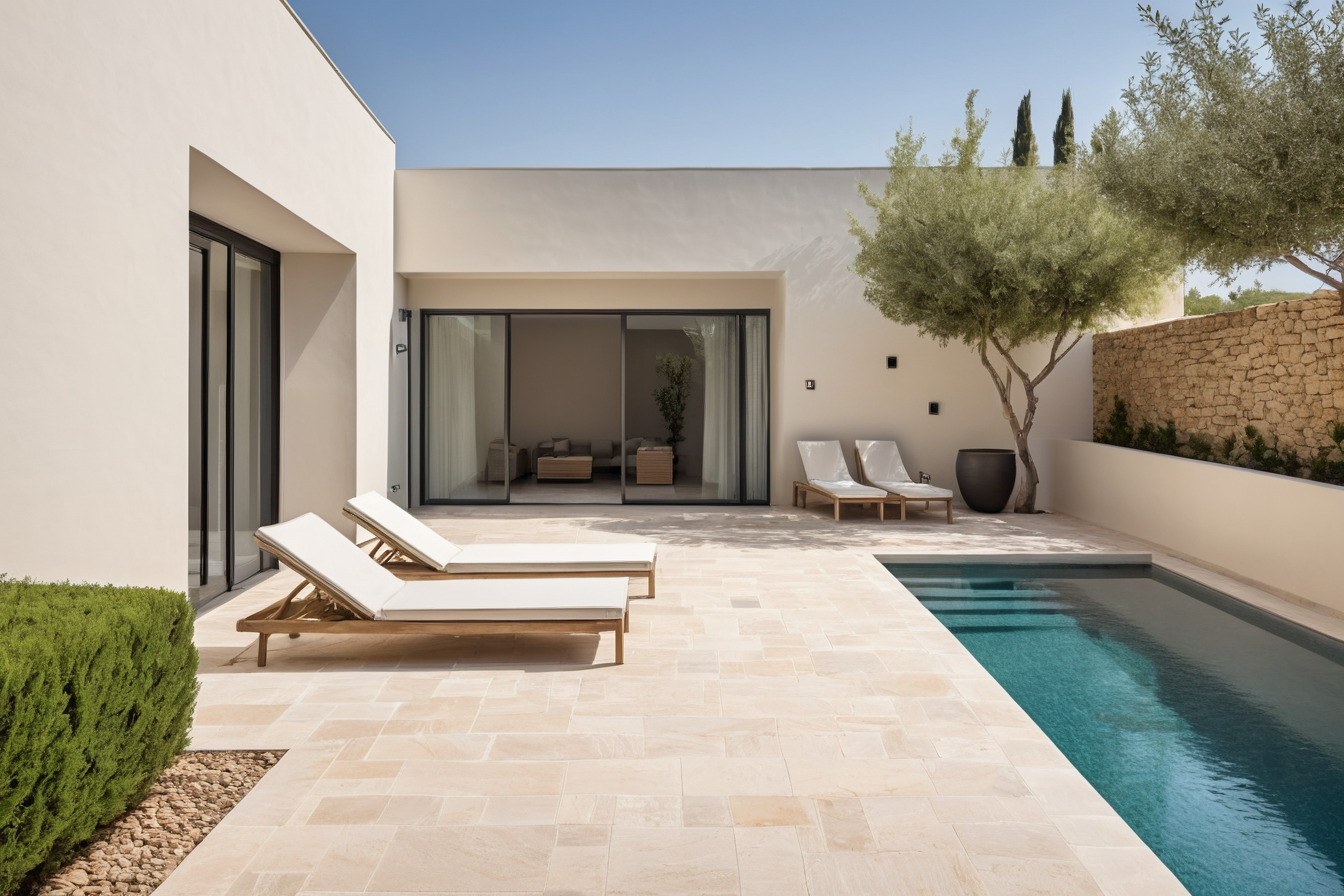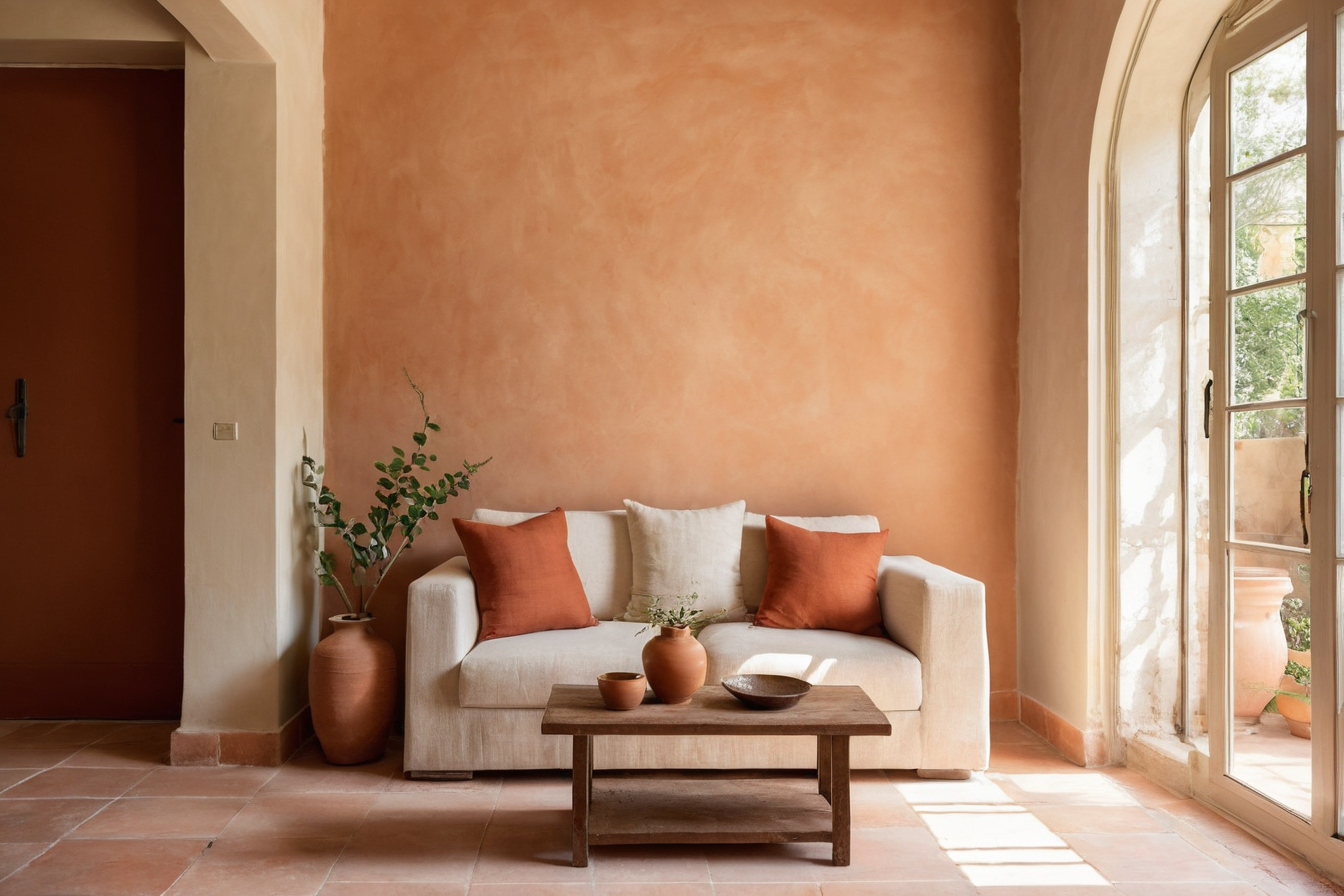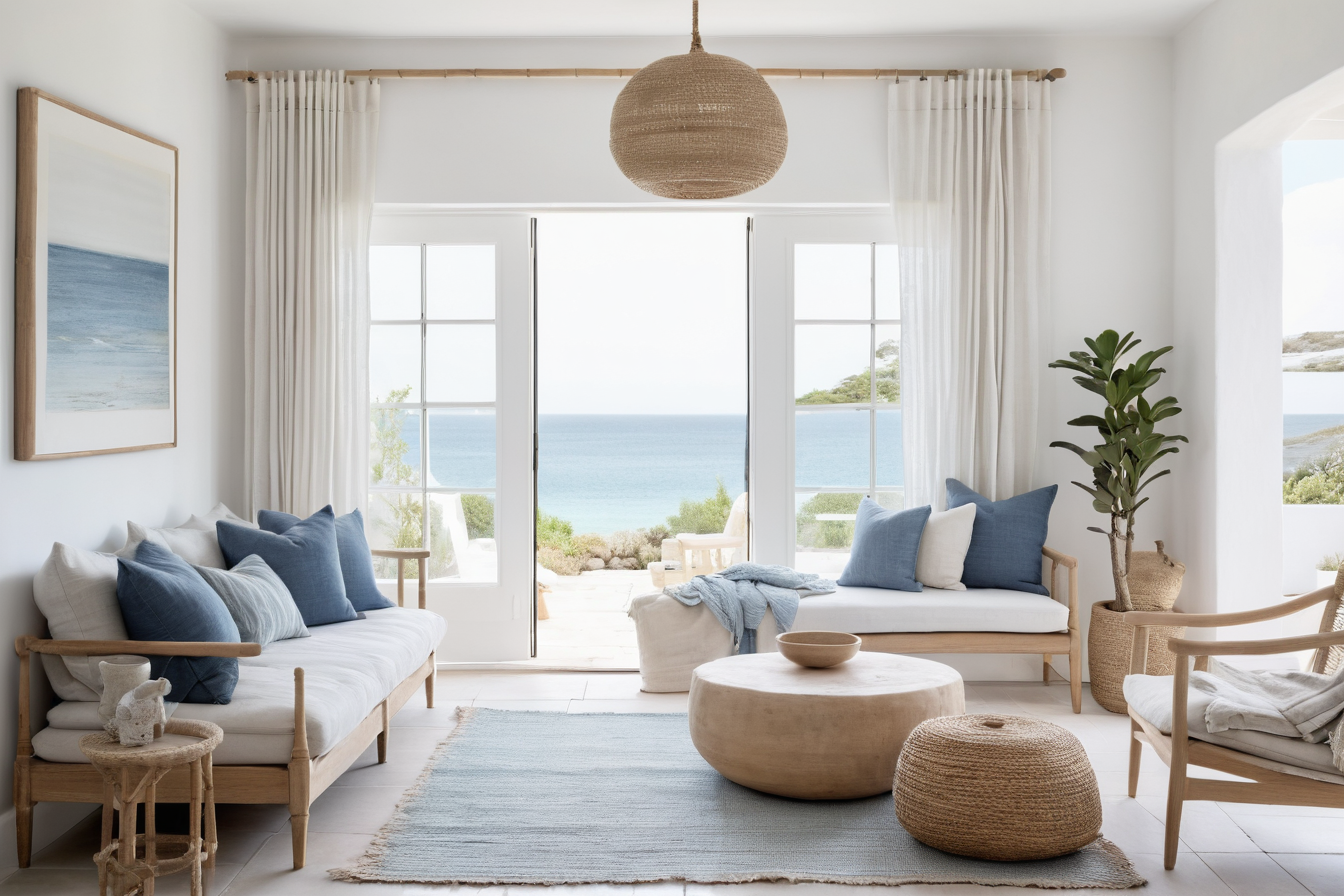
The British coast offers a quieter interior reference than postcard blue and white. Think chalky stone, washed timber, sea-glass tones, sturdy cloth, and rooms that welcome a little imperfection. The aim is a comfortable home that recalls the coast, not a display of nautical props.
Look at the softer palette
Begin with warm whites and pale neutrals, then bring in gray-blue, muted green, sand, or a deeper ink color where the room needs contrast. Place samples beside existing flooring and view them through the day. A cool blue can seem crisp beside warm timber yet stark beside a gray floor; a softer shade may sit better with both.
Keep the palette connected across adjoining rooms, but allow each space its own emphasis. A sitting room may carry a darker textile while a bedroom uses mostly pale surfaces. Repetition of a few tones provides continuity without making every room identical.
Choose texture over decoration
Linen, cotton, wool, ceramic, and timber can provide the tactile interest that novelty ornaments often fail to bring. A woven rug softens a painted floor; a heavy curtain gives a simple bedroom a sense of shelter. If the room already has rough brick or visible beams, contrast them with smoother upholstery rather than adding more rustic effects.
Weathered does not have to mean deliberately distressed. Natural variation in wood or pottery is enough. Select pieces that suit the wear they will receive and that can be maintained in the household’s normal routine.
Arrange rooms for informal living
Coastal character is as much about ease as color. Leave a practical place for coats and shoes near the entrance. In the living room, set chairs where people can talk and see the light. A dining table should have enough space to pull out chairs comfortably, even if the room is compact.
Soft, layered lighting helps pale materials avoid feeling flat after dark. A lamp near a reading chair and another by the dining area can be more inviting than relying on one central fixture.
Add references with a light hand
One framed landscape, a collection of simple ceramics, or a stripe in a cushion may be enough to suggest the shore. Avoid using anchors, ropes, and shells as compulsory signals. Objects with personal meaning can sit alongside coastal colors without needing to fit a strict theme.
The most convincing result feels accumulated and useful. Its materials have substance, its colors respond to daylight, and there is still space for ordinary life to unfold.